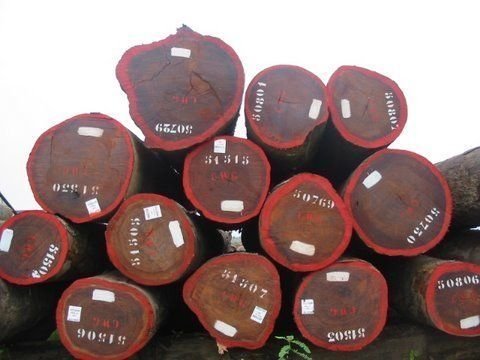
Wenge Wood Logs
Wenge Wood Logs are distinctive tropical hardwood timber products recognised for their dark brown to deep chocolate colour, bold grain pattern, high density, and decorative appearance. Wenge is commonly associated with Millettia laurentii, an African hardwood species native to parts of Central Africa.
The timber is particularly valued for specialist woodworking, furniture, flooring, cabinetry, decorative panels, veneers, turned products, and other applications where a strong natural appearance is desired. Its dense structure and characteristic grain give finished wenge products a distinctive visual appeal.
Because Wenge is a tropical hardwood with conservation and international trade considerations, buyers should verify the exact species, country of origin, legal harvesting status, and required documentation before purchasing or importing Wenge Wood Logs.
What Are Wenge Wood Logs?
Wenge Wood Logs are round timber sections obtained from wenge-producing hardwood trees. The name wenge is primarily associated with Millettia laurentii, although accurate botanical identification is important when purchasing commercial timber.
The heartwood is generally dark brown and can display darker streaks that create a dramatic striped appearance. Wenge is dense and hard, making it suitable for applications requiring durable and visually distinctive hardwood.
Appearance and Grain of Wenge Wood Logs
Wenge is best known for its dark, attractive appearance. The heartwood commonly ranges from medium brown to deep chocolate brown, often featuring darker nearly black streaks.
The grain is typically straight to slightly interlocked, with a coarse texture and prominent pores. This distinctive grain pattern can create a striking appearance when the timber is properly sawn and finished.
Technical Specifications,
| Specification | Typical Description |
|---|---|
| Product | Wenge Wood Logs |
| Common Botanical Name | Millettia laurentii |
| Wood Type | Tropical hardwood |
| Colour | Medium brown to dark chocolate brown |
| Grain | Straight to slightly interlocked |
| Texture | Coarse |
| Density | High; varies with moisture content |
| Hardness | High |
| Durability | Generally durable heartwood |
| Form | Round logs |
| Length | Variable according to supply |
| Diameter | Variable according to log grade |
| Processing | Sawing, turning, machining and finishing |
| Applications | Furniture, flooring, cabinetry, veneer and decorative products |
Specifications vary according to species, origin, grade, moisture content, and log dimensions.
Properties of Wenge Wood Logs
Wenge Wood Logs are valued for several distinctive characteristics:
- Naturally dark brown appearance
- Bold and attractive grain pattern
- High density
- High hardness
- Good durability
- Strong decorative appeal
- Suitable for specialist woodworking
- Can produce a distinctive finished surface
Due to its density and coarse texture, appropriate tooling and machining practices are important when processing wenge timber.
For Furniture Manufacturing
Wenge is highly regarded for specialist furniture and cabinetry. Selected Wenge Wood Logs can be converted into boards, panels, components, veneers, and decorative elements.
The dark colour and contrasting grain can create an elegant appearance in tables, cabinets, shelving, doors, and other furniture products.
Wenge Wood Logs for Flooring
Wenge timber can be processed into flooring products where its hardness, density, and distinctive appearance are suitable for the intended application.
Its dark colour can provide a strong visual contrast within interior spaces. Proper drying, grading, and installation are important to help achieve satisfactory performance.
Wenge Wood Logs for Decorative Woodworking
Wenge is particularly suitable for decorative and specialist woodworking. It may be used for:
- Decorative panels
- Cabinetry
- Veneers
- Handles
- Turning projects
- Inlays
- Interior trim
- Musical-instrument components
- Luxury furniture details
The exact suitability depends on the species, grade, dimensions, and intended application.
Wenge Wood Logs for Musical Instruments
Certain wenge timber is used in specialist musical-instrument manufacturing and components. Its density, hardness, and distinctive appearance can make it suitable for selected instrument parts.
Manufacturers should verify the timber grade, moisture condition, acoustic requirements, and legal sourcing documentation before production.
Processing Wenge Wood Logs
Wenge Wood Logs can be processed through several specialist timber-processing stages:
- Species identification – The botanical species and origin are verified.
- Inspection – Logs are checked for dimensions, defects, colour, and general condition.
- Sorting and grading – Logs are separated according to quality and intended use.
- Sawing – Suitable logs are converted into boards, planks, slabs, or other timber sections.
- Drying – Timber may be carefully air-dried or kiln-dried according to requirements.
- Machining and finishing – Timber can be planed, sanded, shaped, polished, or otherwise finished.
Quality Requirements,
Commercial buyers may assess Wenge Wood Logs based on:
- Exact botanical species
- Country and region of origin
- Log length and diameter
- Straightness
- Heartwood colour
- Grain pattern
- Density
- Moisture content
- Knots and natural defects
- Cracks and splits
- Insect or fungal damage
- Overall timber grade
- Legal and traceability documentation
Accurate species identification is especially important for tropical hardwoods with international trade restrictions.
Sourcing Wenge Wood Logs
When sourcing Wenge Wood Logs, buyers should request detailed information covering species, origin, dimensions, grade, moisture condition, quantity, quality, and available documentation.
For international trade, buyers should verify applicable forestry regulations, export and import requirements, phytosanitary requirements, conservation controls, and timber legality documentation.
Sustainable and Legal Sourcing,
Responsible sourcing is essential when purchasing tropical hardwood timber. Wenge-producing species have faced pressure from habitat loss and harvesting, making legality and traceability important considerations.
Buyers should verify the botanical species, country of origin, legal harvest status, and any permits, certificates, or other documentation required for the intended market.
For Wholesale Buyers
Wenge Wood Logs may be sourced for specialist timber processors, furniture manufacturers, flooring producers, cabinetry businesses, woodworkers, artisans, and other professional users.
For wholesale transactions, buyers should specify:
- Botanical species
- Origin
- Log dimensions
- Grade
- Moisture condition
- Quantity
- Quality requirements
- Loading and packaging requirements
- Legal documentation
- Destination
Why Choose Wenge Wood Logs?
Wenge Wood Logs are valued for their:
- Distinctive dark colour
- Bold natural grain
- High density
- Hardness and durability
- Strong decorative appeal
- Suitability for specialist woodworking
- Applications in furniture and flooring
- Use in selected musical-instrument components
- Unique appearance in finished timber products
Conclusion
Wenge Wood Logs are distinctive tropical hardwood products recognised for their dark brown colour, contrasting grain, high density, and specialist woodworking qualities. Commonly associated with Millettia laurentii, wenge is used in furniture, cabinetry, flooring, veneers, decorative products, and selected specialist applications.
For commercial purchasing, buyers should confirm the exact species, origin, dimensions, grade, moisture condition, quality requirements, and applicable conservation, legality, and trade documentation before shipment. Responsible and traceable sourcing is essential when purchasing Wenge Wood Logs.