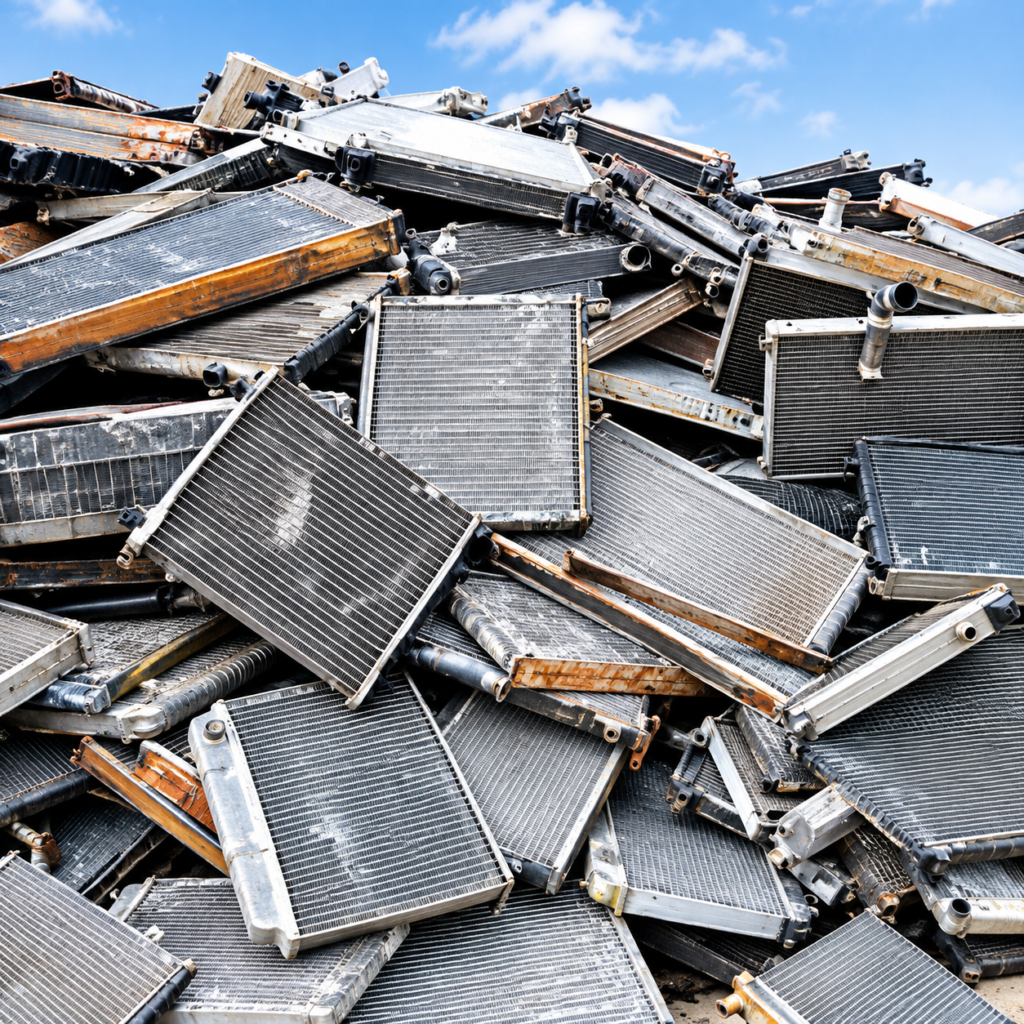
Radiator Scrap Overview
Radiator Scrap is recyclable metal material recovered from vehicle radiators, cooling systems, air-conditioning equipment and industrial machinery. Depending on the type, radiators may contain copper, aluminum and other metal components.
Proper sorting and preparation allow valuable metals to be recovered efficiently.
What Is Radiator Scrap?
Radiator Scrap generally consists of used or surplus radiators that are no longer required for their original application. Common varieties include copper radiators, aluminum radiators and copper-aluminum mixed radiators.
The material can be sorted according to metal composition, condition and cleanliness before recycling.
Different Types
It may include:
- Copper radiators
- Aluminium radiators
- Copper-aluminum radiators
- Automotive radiators
- Truck radiators
- Industrial radiators
- Air-conditioning radiators
- Heat-exchanger units
Radiator Scrap Technical Specifications
| Specification | Typical Description |
|---|---|
| Material | Copper, aluminium or mixed metals |
| Category | Non-ferrous / mixed metal scrap |
| Form | Radiator cores and components |
| Source | Automotive, HVAC and industrial equipment |
| Condition | Used or end-of-life |
| Composition | Copper, aluminium and associated materials |
| Preparation | Sorted, drained and prepared |
| Contamination | Should be minimised |
| Moisture | Preferably clean and dry |
| Packaging | Loose, bundles, pallets or bulk |
| Processing | Sorting, separation and metal recovery |
| End Use | Secondary metal production |
Radiator Scrap Recycling Process
Collected Radiator Scrap is inspected and sorted according to its metal composition and condition. Where required, unwanted attachments and contaminants are removed before the material is prepared for processing.
Copper and aluminium can then be separated and recovered for use as secondary raw materials.
Sorting and Grading
Effective sorting helps distinguish copper radiators, aluminium radiators and mixed-metal units. Clean and properly prepared material can improve handling and downstream recycling efficiency.
Sources
Radiators can be recovered from cars, trucks, buses, air-conditioning systems, industrial machinery, cooling equipment and manufacturing operations.
Benefits of Radiator Recycling
Recycling radiators helps recover valuable copper and aluminium while reducing waste. Recovered metals can re-enter manufacturing processes, supporting resource conservation and the circular economy.
Radiator Scrap for Buyers
It may be supplied in loose, bundled or prepared forms depending on availability. Metal composition, cleanliness, weight, quantity, preparation and prevailing market conditions can influence commercial value.
Frequently Asked Questions
What is Radiator Scrap?
It is used radiator material recovered for recycling and the recovery of valuable metals such as copper and aluminium.
Is Radiator Scrap recyclable?
Yes. Suitable radiators can be processed to recover copper, aluminium and other recyclable materials.
Where does it come from?
Common sources include automotive vehicles, HVAC equipment, industrial machinery and cooling systems.
What affects its value?
Metal composition, copper or aluminium content, cleanliness, weight, contamination, quantity and market conditions can affect value.
Conclusion
It is a valuable source of recyclable copper and aluminum recovered from automotive, HVAC and industrial equipment. Proper sorting and preparation help maximize metal recovery and return these materials to the manufacturing cycle.