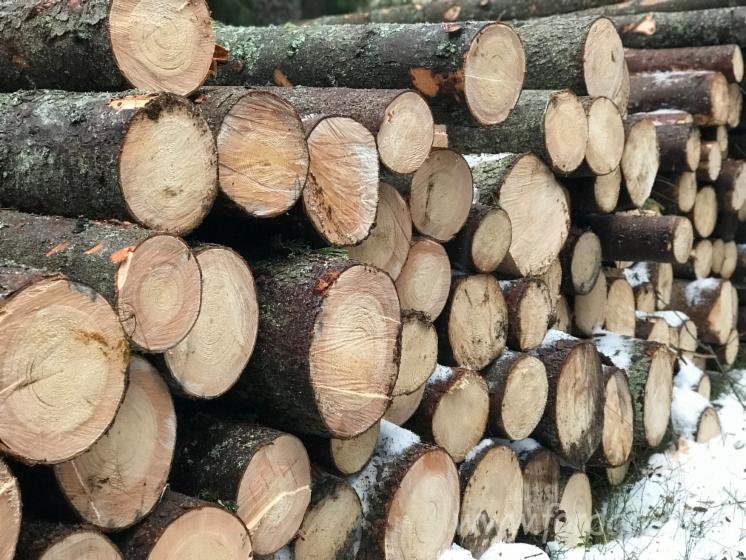
Spruce Wood Logs
Spruce Wood Logs are versatile softwood timber products widely valued for their light colour, relatively straight grain, workability, and suitability for construction and general woodworking. Spruce timber is produced from several species within the Picea genus and is commercially important across Europe, North America, and other regions.
Depending on the species, origin, grade, growing conditions, and moisture content, spruce can offer different levels of strength, density, appearance, and processing characteristics. Properly graded Spruce Wood Logs can be converted into structural timber, boards, beams, packaging materials, furniture components, joinery products, and other wood products.
What Are Spruce Wood Logs?
Spruce Wood Logs are round sections of timber harvested from spruce trees. Spruce is a softwood species commonly used in commercial forestry because of its growth characteristics and broad range of applications.
The timber generally has a pale, clean appearance with a relatively uniform grain. Its combination of light weight, workability, and availability makes it an important material for timber-processing industries.
Appearance and Grain of Spruce Wood Logs
Spruce generally has a pale white to light yellow or creamy appearance. Depending on the species and growing conditions, subtle variations in colour can occur.
The grain is usually straight and the texture is fine to medium. Growth rings are often visible, giving spruce timber a clean natural appearance that works well for both structural and decorative products.
Technical Specifications,
| Specification | Typical Description |
|---|---|
| Product | Spruce Wood Logs |
| Wood Type | Softwood |
| Botanical Genus | Picea |
| Common Colour | White, cream to pale yellow |
| Grain | Generally straight |
| Texture | Fine to medium |
| Density | Varies by species and moisture content |
| Strength | Moderate to good depending on grade |
| Moisture | Fresh, air-dried or kiln-dried |
| Form | Round logs |
| Length | Variable according to supply |
| Diameter | Variable according to log grade |
| Processing | Sawing, planing, machining and turning |
| Applications | Construction, packaging, furniture and woodworking |
Specifications vary according to species, origin, grade, dimensions, and moisture condition.
Properties,
They are valued for several useful timber characteristics:
- Light natural colour
- Generally straight grain
- Relatively lightweight
- Good workability
- Fine to medium texture
- Suitable for sawing and machining
- Good strength-to-weight characteristics
- Suitable for a broad range of timber products
The exact mechanical properties depend on the species and timber grade and should be verified for structural applications.
Spruce Wood Logs for Construction
Spruce is widely used in construction and building products. Appropriately graded logs can be processed into boards, beams, framing timber, roof components, wall structures, and other construction materials.
For load-bearing applications, the finished timber should meet the structural grade and standards required for the intended project and destination market.
Spruce Wood Logs for Structural Timber
Selected Spruce Wood Logs can be converted into structural timber and engineered wood products. The relatively favourable strength-to-weight characteristics of spruce make it useful for applications where efficient and lightweight timber construction is required.
Dimensions, strength class, moisture content, and treatment requirements should be confirmed before purchase.
Spruce Wood Logs for Furniture and Joinery
Spruce timber can be processed into furniture components, shelving, doors, frames, mouldings, interior panels, and other joinery products.
Its light appearance also provides a suitable surface for painting, staining, coating, or other finishing treatments.
Spruce Wood Logs for Packaging
Spruce is commonly processed into packaging timber, pallets, crates, boxes, boards, and other timber packaging products.
Its relatively low weight and ease of processing can make spruce suitable for manufacturers requiring practical and economical timber packaging materials.
Spruce Wood Logs for Pulp and Wood Products
Depending on grade and local processing industries, spruce can also be used for pulp, paper-related products, wood panels, engineered timber, and other manufactured wood products.
Lower grades or material unsuitable for high-value sawn timber may therefore have alternative industrial applications.
Processing,
Spruce Wood Logs can be processed through several stages:
- Inspection – Logs are checked for dimensions, straightness, defects, and general condition.
- Sorting and grading – Logs are separated according to quality and intended use.
- Debarking – Bark may be removed depending on the processing requirements.
- Sawing – Logs are converted into boards, beams, planks, or other sections.
- Drying – Timber may be air-dried or kiln-dried to achieve the required moisture level.
- Machining and finishing – Timber can be planed, sanded, shaped, treated, or finished.
Quality Requirements for Spruce Wood Logs
Commercial buyers may assess Spruce Wood Logs according to:
- Exact species
- Country and region of origin
- Log length and diameter
- Straightness
- Growth-ring characteristics
- Knots
- Cracks and splits
- Resin pockets
- Moisture content
- Insect or fungal damage
- Overall timber grade
- Required certification or documentation
Clear quality and grading requirements should be agreed before bulk purchasing.
Sourcing Spruce Wood Logs
When sourcing Spruce Wood Logs, buyers should request information covering species, origin, dimensions, grade, moisture condition, quantity, packaging, processing requirements, and available documentation.
For international shipments, buyers should also verify applicable forestry, phytosanitary, import, export, and timber-trade requirements.
Sustainable and Legal Timber Sourcing
Responsible sourcing is important when purchasing Spruce Wood Logs. Buyers should verify the legal origin of the timber and request appropriate forestry and traceability documentation where required.
Depending on the origin and destination, additional requirements may include legality verification, forestry documentation, certification, traceability records, and phytosanitary documentation.
For Wholesale Buyers
Spruce Wood Logs can be sourced for sawmills, timber processors, construction suppliers, furniture manufacturers, packaging companies, joinery businesses, flooring producers, and woodworking industries.
For wholesale orders, buyers should specify:
- Species
- Log dimensions
- Grade
- Moisture condition
- Quantity
- Processing requirements
- Loading method
- Documentation
- Destination
Why Choose Spruce Wood Logs?
Spruce Wood Logs are valued for their:
- Light natural appearance
- Straight grain
- Relatively lightweight structure
- Good workability
- Useful strength-to-weight characteristics
- Suitability for construction
- Applications in furniture and joinery
- Use in packaging and manufactured wood products
- Availability in different grades and dimensions
Conclusion
Spruce Wood Logs are versatile softwood timber products used across construction, structural timber, furniture, joinery, packaging, woodworking, and manufactured wood industries. Their light colour, generally straight grain, relatively low weight, and good workability make spruce an important commercial timber.
For bulk purchasing, buyers should confirm the exact species, origin, dimensions, grade, moisture content, intended application, quality requirements, and applicable legal or trade documentation before shipment.